
Fascia bodywork.
Hands with a plan.
Soft tissue work in Los Angeles for people with something specific to solve. Every session here is given by a chiropractor who is also a licensed massage therapist, which changes what the hands are looking for.
What this actually is
This is treatment. The room is quiet and nothing about it is rushed, but the session is aimed at something: a restriction, an adhesion, a muscle that will not let go of the joint it crosses.
It starts with a short assessment. Where it hurts, what makes it worse, what you have already tried, and what the tissue feels like under a hand. The work then goes where that points, rather than running a fixed routine from your neck down to your feet.
You will be asked to move during parts of it. Some of it is uncomfortable in a way that feels productive, and none of it should be something you have to brace against or breathe through. Say so and the pressure changes.
Who is doing the work
The person doing your bodywork here is a chiropractor. Dr. Max is also a licensed massage therapist in California, and worked as one for five years, four of them running his own studio, before he ever went to chiropractic school.
That combination changes what the hands are looking for. A massage therapist is trained to work tissue. A chiropractor is trained to work out why the tissue got that way. When one person does both, the hour goes to the structure actually driving the problem rather than to the area that happens to hurt.
It also means you get told when soft tissue is not the answer. Diagnosis sits outside a massage therapist's scope, which is not a criticism of the profession, it is simply the licensing. In practice it means a session somewhere else can tell you an area felt tight. Here you can find out it is a disc.
The four things we work with
Which of these you get, and in what proportion, depends on what the assessment found and what the tissue allows that day.
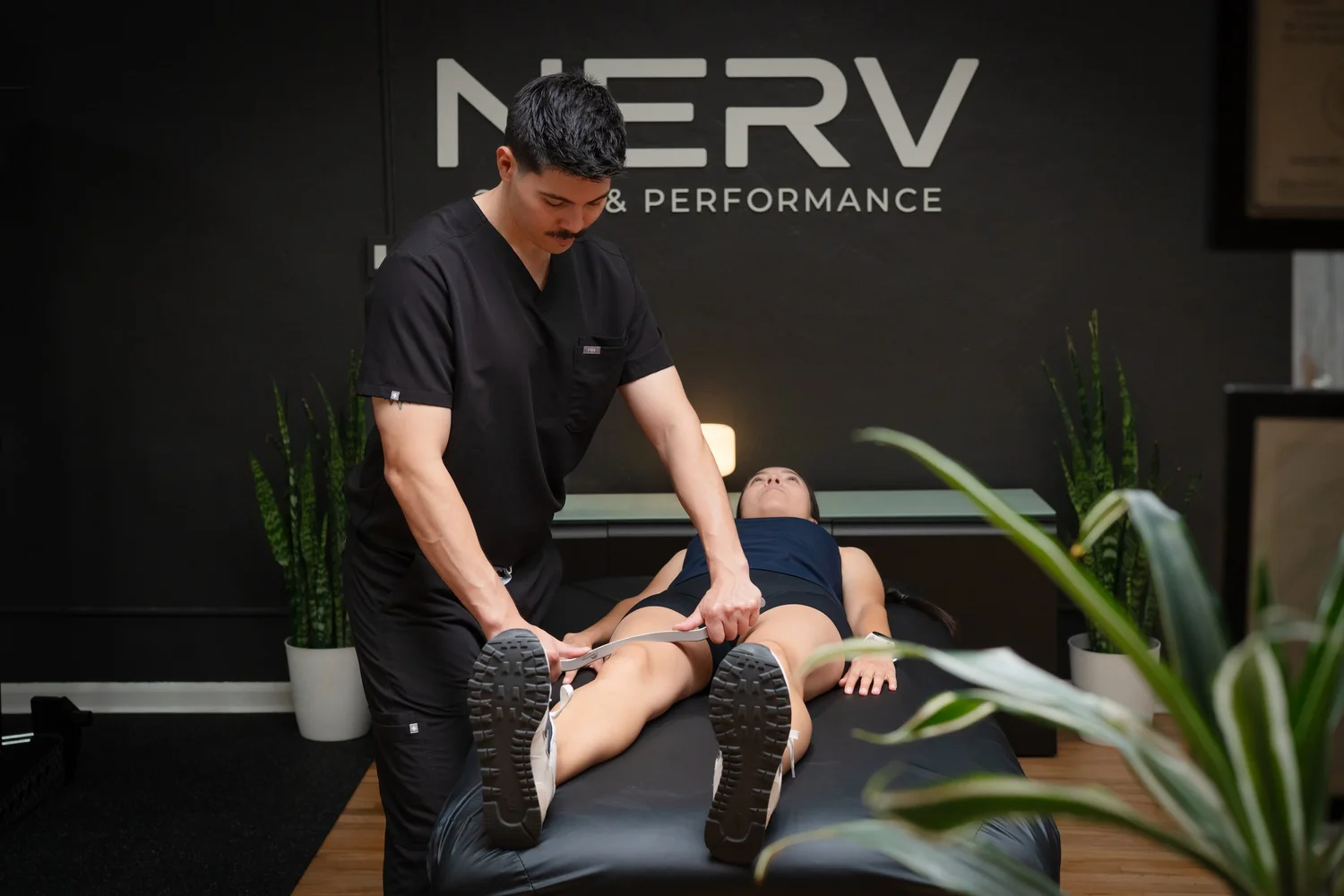
Tissue is held under tension while you move the limb through its range. The movement is what frees the adhesion, which is why ART often changes how something moves within a session rather than only how it feels. Certified in ART Spine.
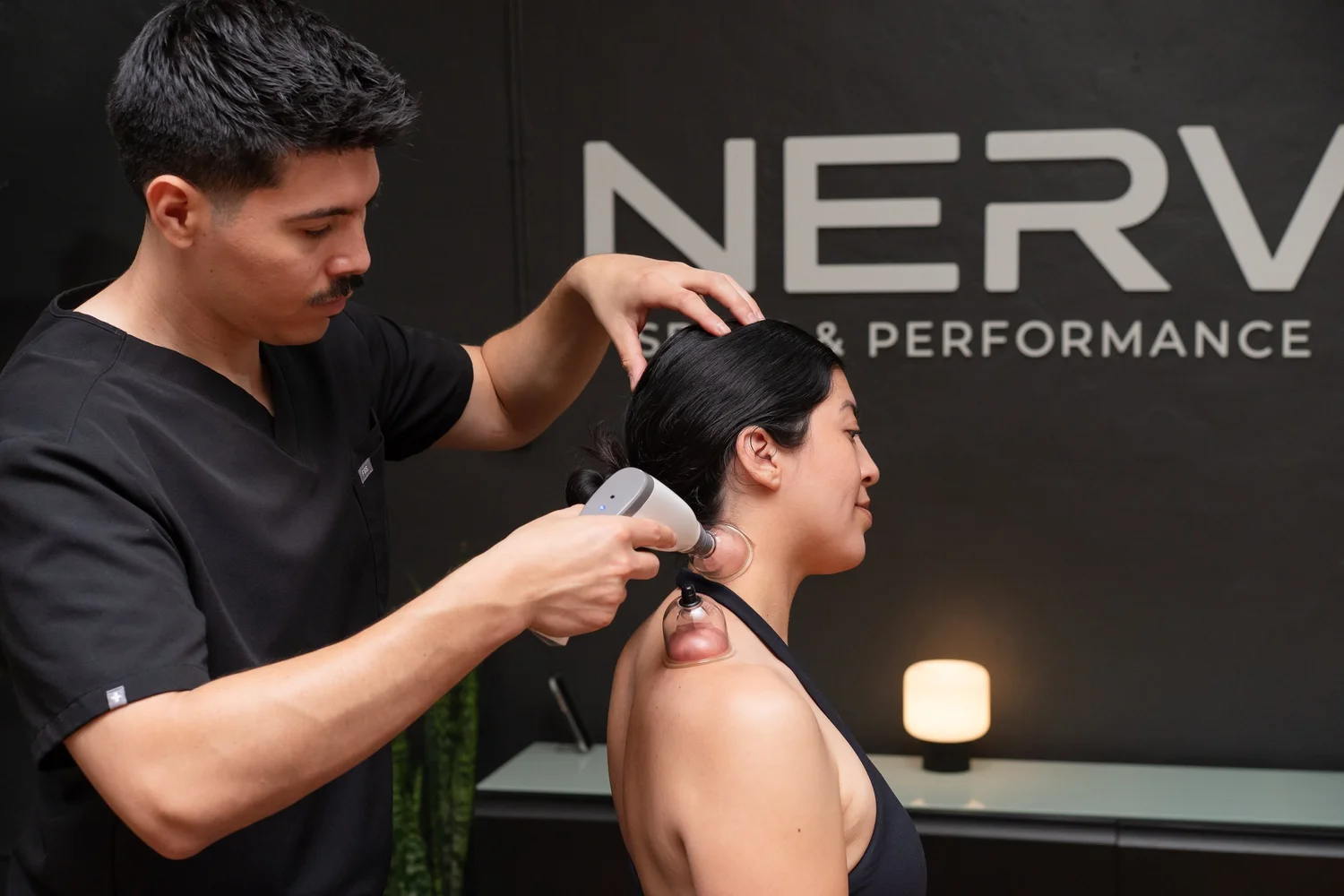
Almost every hands-on technique compresses tissue. Cups do the opposite. They lift skin and fascia away from what sits underneath, opening up layers that pressing down only flattens. Usually paired with movement so the tissue glides while it is decompressed.
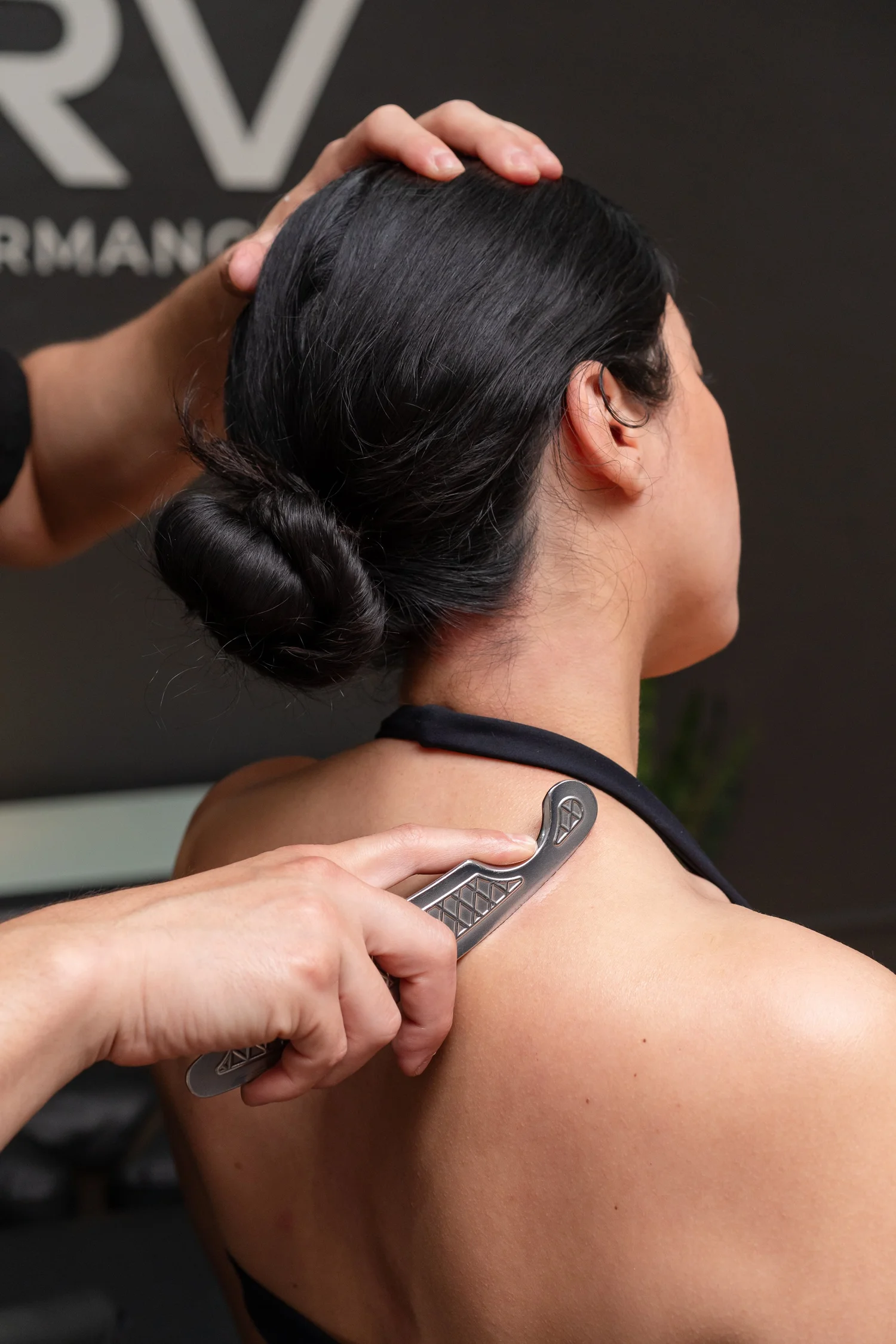
A steel tool drawn across the tissue picks up restriction that hands can skim over, and covers a broad area with consistent force. Useful over old scar tissue, along the IT band and the forearm, and anywhere the fascia has thickened and stopped sliding.
Slow, sustained pressure through the fascial layers, working with your breathing rather than against it. This is the foundation the rest of it sits on, and for plenty of people it is most of the session.
Pressure is easy.
Knowing where to put it is not.
If you are training
People who train hard are the other half of this practice, and the problem there is usually not an injury yet. It is a hip that has quietly stopped rotating, a calf taking load the glute should be taking, a shoulder that is fine until week three of a block.
Work during a training block is about keeping tissue quality ahead of training volume, so the thing that has been nagging does not become the thing that stops you. What gets treated is decided by what your training is actually asking of you that month, not by a standard sports massage sequence.
How often is worth working out together after the first session rather than committing to a package before anyone knows how you respond.
How it fits with chiropractic care
Bodywork is open to anyone. You do not need to be a chiropractic patient to book it, and plenty of people only ever come in for this.
If you are in real pain rather than general tightness, though, a first visit is worth doing first. The exam sorts out whether the tissue is the problem or is only reacting to something else, like a disc or a compressed nerve root. Soft tissue work on a muscle that is guarding for a good reason feels excellent for a day and then goes straight back.
Sessions and pricing
$80
One region, one problem. Enough for a neck and shoulder, or a calf and foot. Works well as maintenance between chiropractic visits.
$160
The standard session. Two or three connected areas, with time left at the end to reassess and confirm that what we changed actually changed.
$225
Full body, or one stubborn region worked properly rather than partially. Most useful in a heavy training block, or for anyone who has been carrying something for years.
Book a session
Come in with something specific you want addressed, or come in and we will find it. Either way the first few minutes are spent working out where the session should go.
Book fascia bodywork5478 Wilshire Blvd, Unit 212 · Los Angeles, CA 90036