
Chiropractic care.
Diagnosis first.
Most people who come to this office in Los Angeles have been adjusted somewhere before. What they have usually not had is someone take the time to work out where the pain is actually coming from. That is where every visit here starts.
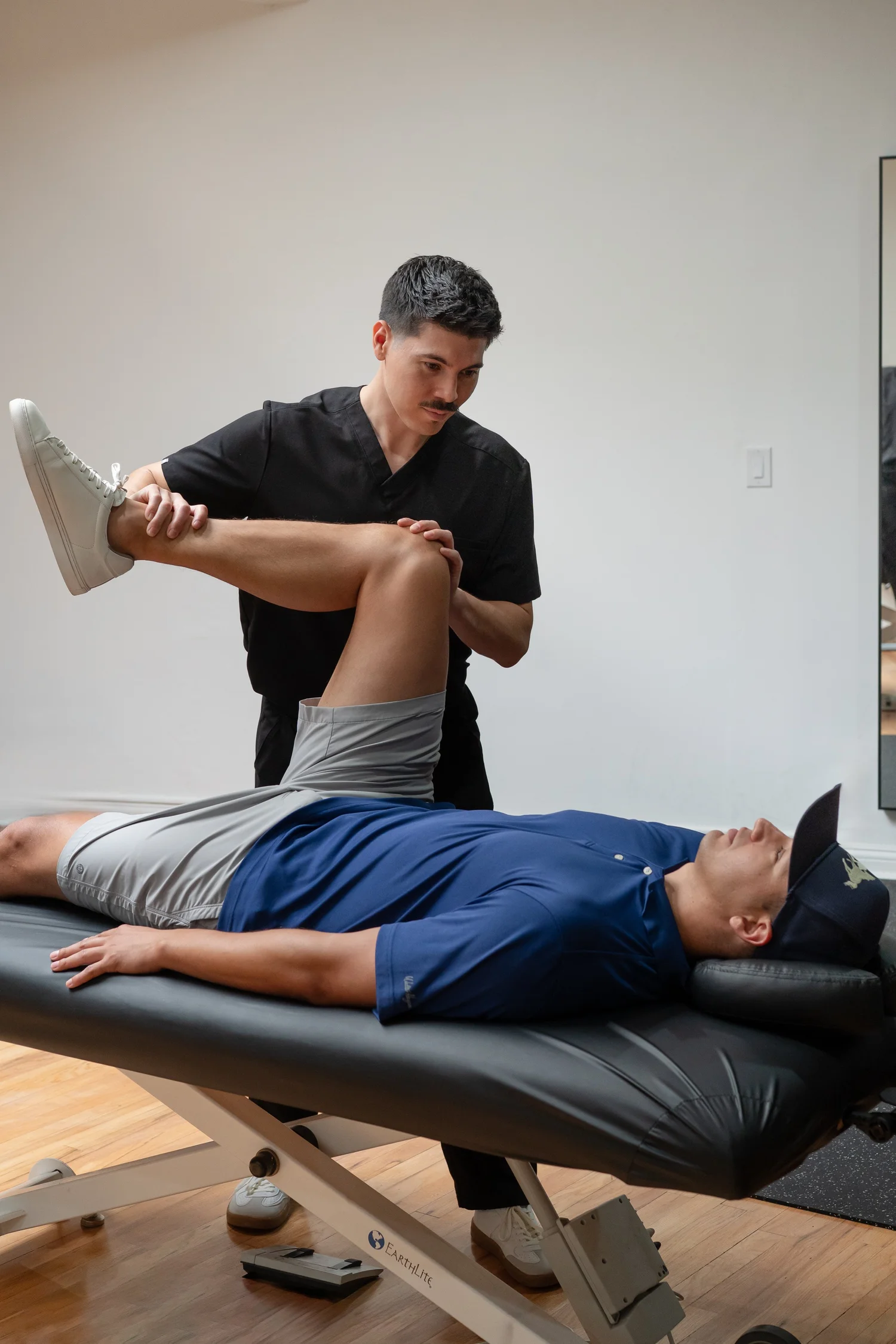
The exam is the treatment plan
Low back pain that runs down the leg can come from a disc pressing on a nerve root, from a joint in the pelvis, from a muscle compressing the nerve further down the line, or from more than one of those at once. From the outside the complaint sounds identical. The treatment is not.
So the first visit is built around finding out which one it is. Orthopedic testing to load the structures one at a time and see which reproduces your symptoms. Neurological testing for reflexes, sensation and strength, because a nerve that is being compressed leaves a pattern. Range of motion, palpation, and a history that goes back further than the day it started.
You get told what was found and what it means before anything is done about it. If the findings point somewhere chiropractic is not the right answer, you hear that too, and you get referred rather than treated.
The adjustment is chosen, not assumed
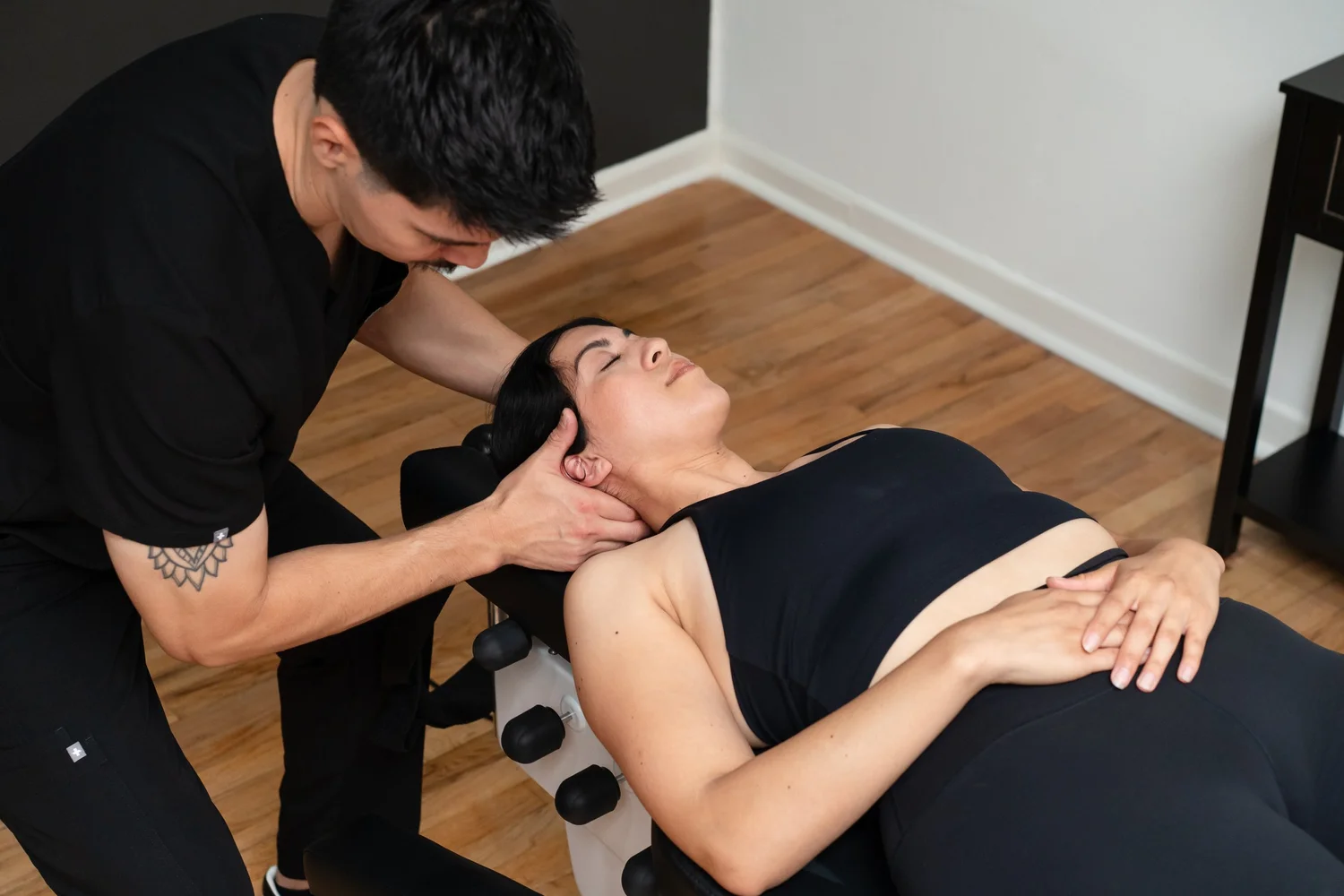
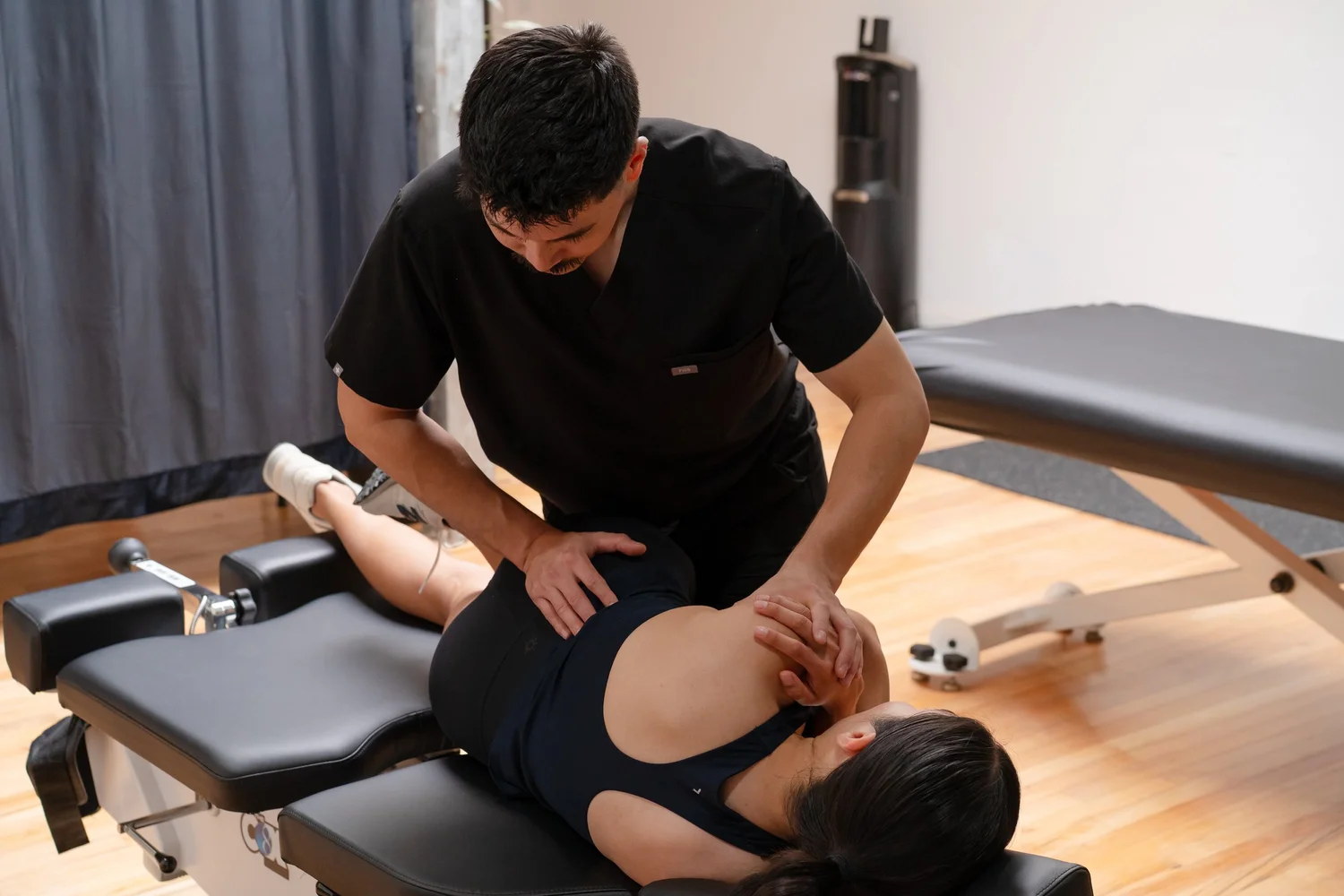
There is more than one way to move a joint, and the version you get should depend on what is wrong with it. All four of these are available here.
The traditional hands-on adjustment. A specific contact and a quick, shallow thrust into a restricted joint. This is the one that makes the sound people expect, and it is the right tool when the joint is stuck and the tissue around it is calm enough to allow it.
A section of the table drops a fraction of an inch as the contact is made, so the joint gets the speed without absorbing the force. Useful for the pelvis and the mid-back, and for anyone whose body braces the moment they are touched.
A handheld instrument delivers one precise, measured impulse. No twisting, no cavitation, no sound. This is what gets used for people who do not want to be cracked, and for people who should not be, including some older patients and anyone with bone density concerns.
No thrust at all. Graded joint movement to restore motion in an irritable segment, or the Cox table when a disc or a nerve root is the problem and the level needs to be opened rather than loaded.
What it feels like to be adjusted here
Which method you get depends on what the exam found, how irritable the tissue is on the day, and what you are comfortable with. If you do not want to be cracked, say so at the start. There is a version of this that works without it.
Nothing happens by surprise. You are told what is about to be done and where, and if a position reproduces your symptoms sharply, that is information and the setup changes.
The adjustment is one step.
It was never the whole plan.
Soft tissue comes before the joint
A decade of hands-on manual therapy before chiropractic school changed the order things happen in here. A joint held in place by guarded muscle will move under a thrust and then get pulled straight back where it was, often within a day. That is the real reason adjustments stop holding.
So the tissue gets released first. Inside a chiropractic visit that means Active Release, myofascial work and cupping applied where the exam says the restriction actually is, not everywhere. It is part of the treatment rather than an add-on you are sold at the end.
If the soft tissue turns out to be the main problem rather than a supporting one, a longer standalone session is the better use of your time and your money.
Then you have to load it
The part most offices hand off is the part that decides whether any of this lasts. Here the person who examined you is the person who builds your movement work, because they are the one who knows which direction hurt and which one did not.
You leave with something specific, sent as short videos or a PDF so you are not trying to reconstruct a demonstration from memory three days later. It changes as your findings change. If there is time left in the visit we run through it together. If there is not, it goes into the next one.
On imaging
There is no X-ray machine in this office, and most people do not need one. Imaging gets ordered or referred out when the exam gives a reason for it: significant trauma, red flags in the history, a neurological deficit that is progressing, or a case that is not responding the way the findings said it should.
A picture on its own does not explain pain. Plenty of people walk around with disc bulges and degenerative changes and no symptoms at all. The exam is what connects the image to the problem, which is why it comes first either way.
What a visit actually looks like
Sixty minutes. Full history, orthopedic and neurological testing, hands-on treatment the same day, and a plan explained to you before you leave.
Thirty or sixty minutes, never double-booked. Reassess what changed, treat, and adjust the plan based on what the reassessment shows rather than on a schedule set in week one.
You get a projection after your exam, not an open-ended commitment. Disc and nerve cases are usually seen more often early on and tapered as symptoms settle.
Disc injuries, sciatica and nerve compression, TMJ dysfunction, and chronic joint and muscle pain that has not resolved with other care.
Conditions we treat
Start with the exam
Your first visit is sixty minutes: full history, orthopedic and neurological testing, and hands-on treatment the same day. You will know what is driving your pain before you leave.
Book your first visit5478 Wilshire Blvd, Unit 212 · Los Angeles, CA 90036